Micron’s $1.8B PSMC Acquisition: Inside the Taiwan DRAM Capacity Land Grab
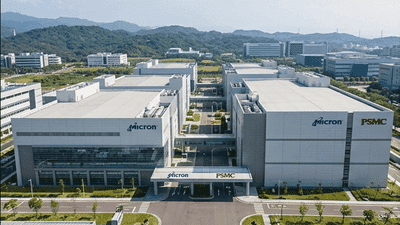
Micron’s $1.8 billion Taiwan deal is not an acquisition of PSMC itself. It is the purchase of PSMC’s P5 manufacturing site in Tongluo, Miaoli County—a transaction that gives Micron existing cleanroom infrastructure and a route to expand advanced DRAM production faster than starting entirely from scratch.

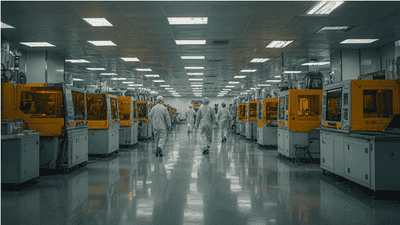
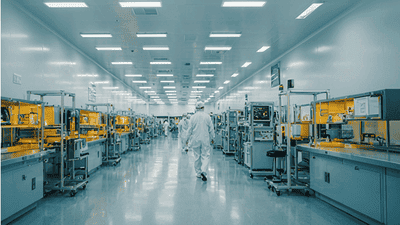
Micron announced completion on March 15, 2026, taking ownership of approximately 300,000 square feet of existing 300mm cleanroom space. The company said meaningful product shipments were expected from the existing fab beginning in fiscal 2028. It also outlined a second facility with approximately 270,000 square feet of additional cleanroom space. Those are development plans and shipment expectations, not evidence that the acquired site was already delivering mature production at closing.
The strategic appeal is clear: in a tight memory market, time can be as valuable as land.
But the economics reach beyond acquisition price. Interest rates affect the cost of waiting, currencies reshape procurement, credit determines financial resilience, and power and materials influence how quickly the site becomes productive.
What Micron Actually Bought
The deal secures a manufacturing location and existing infrastructure, not an immediately interchangeable advanced-memory production system.
TrendForce reported that the purchase excluded production equipment. Micron must therefore equip and adapt the site for its own processes rather than assume PSMC’s existing operations can simply become leading-edge Micron output.
That distinction changes the capital calculation.
The $1.8 billion purchase price is the entry cost. Equipment, modifications, process development, and ramp-up spending come afterward.
It also changes the risk profile. Buying an existing facility can reduce some construction uncertainty, but conversion introduces its own engineering and integration requirements.
The commercial question is whether those requirements can be completed more efficiently than the alternatives—not whether the cleanroom exists.
The Real Asset Is the Time Saved
A greenfield fab requires site preparation, buildings, infrastructure, equipment installation, and production development.
An existing cleanroom can move the buyer past part of that sequence.
This does not eliminate the remaining work. It gives Micron a different starting point.
If the site can be adapted successfully, earlier readiness may support earlier process learning and customer qualification. That can be valuable when demand exceeds available supply.
However, the time advantage must be measured against the actual project schedule.
A purchased building that takes longer than expected to convert can lose part of its advantage. Existing infrastructure is useful only when it suits the intended manufacturing requirements.
The acquisition is therefore a bet on accelerated execution, not merely a purchase of square footage.
Keep Wafer Output and Product Shipments Separate
Micron’s January announcement initially expected meaningful DRAM wafer output in the second half of calendar 2027. Its completion announcement later described meaningful product shipments beginning in fiscal 2028.
These statements should not automatically be treated as contradictory.
Wafer output and finished-product shipments are different milestones, while calendar and fiscal periods use different boundaries.
Production can begin before the resulting products pass through testing, packaging, and delivery.
The distinction matters for financial forecasting. A manufacturing milestone does not necessarily correspond to immediate revenue recognition or cash collection.
Analysts should therefore model the sequence explicitly: equipment readiness, qualified wafer production, finished products, customer acceptance, and payment.
The timeline becomes more credible when each stage is supported by evidence rather than collapsed into one “capacity online” date.
Why Taiwan Makes Strategic Sense

The acquired site lies approximately 15 miles from Micron’s existing Taichung operations. Micron said the proximity could support synergies across its Taiwan manufacturing footprint.
That offers a practical rationale beyond the cleanroom itself.
Nearby operations can potentially support coordination, engineering, staffing, and established supplier relationships.
But proximity is not an automatic guarantee of lower costs. The facilities still require appropriate processes, logistics, and operating arrangements.
The investment should also be viewed within Micron’s wider manufacturing network rather than as a decision to concentrate every future activity in one location.
Regional efficiency and geographic resilience are different objectives. A project can improve the first while requiring careful management of the second.
The balance depends on how the overall network is designed.
The Partnership Extends Beyond the Site Sale
The transaction also includes cooperation between Micron and PSMC.
Micron’s January announcement described plans for PSMC to support DRAM assembly services, while Micron would assist PSMC in enhancing its legacy DRAM portfolio. PSMC separately described a longer-term relationship involving DRAM advanced-packaging wafer manufacturing.
This makes the arrangement more than a simple property transfer.
The parties are reallocating assets and capabilities while retaining commercial connections.
That could help Micron coordinate front-end expansion with supporting services. It could also help PSMC redirect its business toward areas where partnership is more attractive than owning the sold site.
Still, the precise revenue and margin benefits depend on implementation. A strategic agreement identifies opportunity; it does not establish the eventual financial result.
Interest Rates Put a Price on the Ramp
Micron pays for an asset before the asset produces its intended commercial return.
Higher interest rates make that waiting period more expensive, whether the company uses debt or internal cash.
Borrowing creates explicit financing costs. Internal funding carries an opportunity cost because the money could be used elsewhere.
An acquisition that genuinely accelerates production can improve the present value of future cash flows.
But acceleration is worth paying for only if the resulting output is profitable.
If conversion takes longer or memory prices weaken before production matures, the return can disappoint despite the apparent construction shortcut.
The relevant comparison is therefore not simply acquisition versus construction. It is the risk-adjusted cash-flow profile of each route.
Credit Analysts Look Beyond the Purchase Price
A $1.8 billion cash transaction is substantial, but it is only one part of the financial commitment.
Micron must also fund equipment, modifications, development, and working capital. The proposed second facility adds another layer of future investment.
Credit analysis asks whether those commitments remain manageable under weaker operating conditions.
Memory prices can change faster than a manufacturing project can be redesigned.
A company may therefore need to carry expenditure through a period when cash generation is below its planning assumptions.
Liquidity, spending flexibility, debt maturities, and the ability to phase investments all matter.
The acquisition improves access to infrastructure. It does not remove the need for financial endurance while that infrastructure becomes useful production capacity.
The Taiwan Dollar Creates Opposing Effects
The headline purchase price is denominated in US dollars, but subsequent costs may involve Taiwan dollars and other currencies.
A stronger dollar can lower the dollar cost of some local-currency expenses. A stronger Taiwan dollar can move that relationship in the opposite direction.
Yet equipment and materials may be priced internationally, limiting the benefit of cheaper local operating costs.
Contracts, hedging, invoicing, and payment schedules determine the actual exposure.
This is why a currency move cannot be labeled universally favorable or unfavorable for the project.
Micron’s global receipts and expenses add further complexity. The correct analysis follows cash flows across the manufacturing network rather than assuming that a Taiwan investment creates one simple currency position.
Power, Water, and Materials Still Govern Readiness
An existing cleanroom reduces some infrastructure work. It does not make utilities and inputs irrelevant.
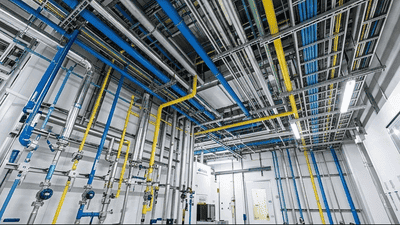
Advanced production requires dependable electricity, water treatment, specialized chemicals, gases, and supporting systems.
Higher input costs can raise the operating budget. Limited availability can delay equipment use or restrict production.
Those effects are different: a price increase may be manageable, while an availability problem can stop progress altogether.
Semiconductor-grade materials also depend on purity and qualification. Their economic value is not captured by a bulk commodity benchmark alone.
For Micron, readiness means more than owning a building. The complete production environment must support the intended process consistently.
That is the physical test behind the financial model.
Will the Deal Reduce DRAM Prices?
Eventually, additional qualified supply can ease pricing pressure. But the timing and magnitude are uncertain.
If demand remains ahead of supply, the new output may fill a shortage rather than create excess inventory.
If customer consumption slows while multiple manufacturers expand, the same investment could contribute to a more competitive market.
Product mix matters too.
Advanced DRAM and HBM-related demand do not translate into one homogeneous capacity requirement. Yield, generation, packaging, and qualification determine which products the factory can support.
TrendForce characterized the acquisition and partnership as potentially improving the DRAM supply outlook by 2027. That was a forward-looking assessment, not a declaration that the transaction immediately increased global shipments.
The pricing effect must be evaluated against actual consumption.
The Capacity Land Grab Has a Cyclical Risk
The appeal of existing infrastructure becomes strongest during scarcity.
That is also when manufacturers may be most tempted to assume favorable conditions will persist.
The cycle can turn before the acquired site reaches maturity. Customers can adjust orders, product transitions can alter demand, and competitors can add capacity.
A good asset can therefore produce a disappointing return if purchased or equipped under overly optimistic assumptions.
The defense is not avoiding expansion altogether. It is maintaining flexibility and realistic stress tests.
Micron’s phased approach can help manage timing, but it cannot eliminate uncertainty.
The project ultimately competes in a product market, not in a contest over who owns the most cleanroom space.
The Seller’s Economics Also Change
PSMC receives cash and relinquishes the Tongluo site while retaining a partnership role.
That can alter its investment requirements and strategic priorities.
But sale proceeds should not be confused with recurring operating earnings. Their long-term value depends on how the company uses the capital and develops its remaining businesses.
PSMC’s completion announcement emphasized specialty DRAM and its broader 3D AI foundry direction. These were strategic objectives rather than proof of completed commercial benefits.
For investors, the transaction creates two distinct theses: Micron’s capacity-conversion opportunity and PSMC’s asset-reallocation opportunity.
They should be assessed separately. The success of one does not automatically establish the success of the other.
A Practical Scorecard for the Acquisition
The central requirement is conversion: existing infrastructure must become qualified, economically competitive output.
A useful scorecard includes:
- Equipment installation and process-readiness milestones.
- Wafer output separately from finished-product shipments.
- Yield, utilization, and cost improvement.
- Customer qualification and acceptance.
- Total investment beyond the acquisition price.
- Currency, utility, and input-cost exposure.
- Memory pricing and demand when production ramps.
These indicators connect the property transaction to the operating business.
They also prevent the headline from implying an immediate increase in profitable capacity.
A Bet on Time, Not Just Taiwan
Micron’s acquisition secures an existing manufacturing platform and a partnership that could support faster expansion. The opportunity is real, but the company bought the P5 site—not PSMC as a whole—and the purchase price is not the complete investment requirement.
The macro linkages determine how valuable the shortcut becomes. Rates price the waiting period, credit supports endurance, currencies alter costs, and infrastructure governs readiness.
The final judgment will depend on whether Micron delivers qualified memory when customers need it, at economics that justify the capital committed.
In this capacity land grab, owning the ground is only the beginning. Winning means turning it into productive output before the market moves on.